
Thermal Fluid Heaters from Enerquip
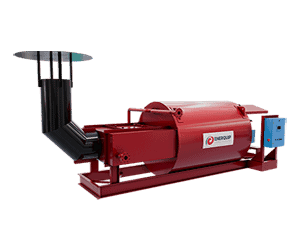
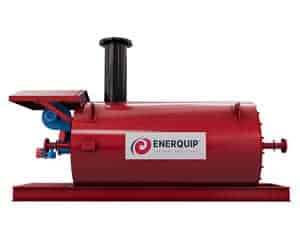
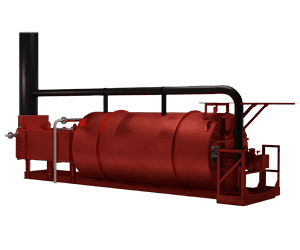
Across the heater industry, thermal fluid heaters (also called hot oil heaters) are the backbone of industrial process heating. A heat transfer fluid, typically mineral or synthetic oil, is heated by a gas-fired burner and circulated through a closed-loop system, delivering consistent, controlled heat to your process.
These industrial heating systems play a critical role in asphalt, refining, and tank terminals, where reliable heat and precise temperature control are essential to productivity and safety.
How Thermal Fluid Heaters Work
When a thermal fluid heating system is designed and operated efficiently, it helps your facility:
- Maintain stable process temperatures.
- Reduce fuel consumption and operating costs.
- Extend fluid and equipment life.
- Minimize downtime and unplanned maintenance.
- Operate confidently at higher process temperatures.
Enerquip thermal fluid heaters are engineered to deliver these results. High-efficiency designs, optimized heat transfer, and precise control support reliable operation and long-term performance, so your facility gets more value from every BTU.
Thermal Fluid Heater Configurations
Backed by decades of experience, our engineered systems use proprietary thermal design software to solve performance issues and deliver exceptional fuel efficiency.
Standard Features and Available Configurations
- Radiant heating coil: Serpentine or helically wound (single or double coil)
- Sizes:3 to 40 MM BTU/hr. Need something larger? Let’s talk.
- Orientation: Horizontal or vertical
- Emissions options: Standard (80 to 120 ppm), Low NOx (<30 ppm), or Ultra Low NOx (<9 ppm)
- Burner: High-efficiency gas-fired burner with burner management system (BMS).
- Finned convection section: Built-in economizer on serpentine coil heaters that recovers waste heat to improve efficiency
- Recirculation pump(s)
- Control panel: NEMA 4 panel with integrated safety features and alarms
- Fuel train: Pre-piped and pre-wired for natural gas and/or alternate fuels
- Expansion tank: 1,000-gallon tank
Optional Add-Ons and Upgrades
- Tank stand: Available in various custom sizes on request
- Control panel: NEMA 4X, with app connectivity for remote diagnostics
- Expansion tank: 250 to 3,000 gallons, with optional nitrogen blanketing
Optional Start-Up Support
- Review of installed work and piping
- Supervision of system fill and oil circulation.
- Burner tuning
- Testing of circuits and safety devices
- Operator training for monitoring and safe operation
- Troubleshooting as required
Wondering about payback? Calculate the payback period for a new serpentine coil thermal fluid heater.
Serpentine vs. Helical Coil
Every application has unique heating requirements, so Enerquip offers multiple coil designs. Whether you need the compact simplicity of a single helical coil, the improved heat transfer and efficiency of a double helical coil, or the highest level of thermal performance, fluid protection, and efficiency offered by a serpentine coil, there’s a proven solution to fit your process. Compare the options below.
Serpentine Coil Heat Exchange
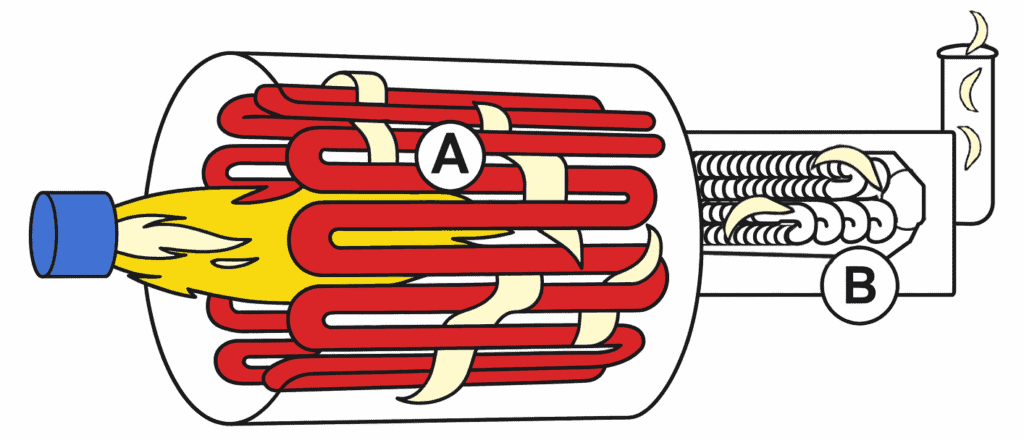
Serpentine coils use a zig-zag tube layout for more even heat distribution.
In the radiant section (A), heat reaches the front, sides, and back of the coil, which means better heat transfer, less coil degradation, longer tube life, and higher operating oil temperatures.
In the convection section (B), heat transfers to a much larger surface area in our integrated economizer, reducing stack temperature and increasing efficiency.
Curious what that gain looks like in dollars? Try our ROI calculator.
Double Helical Coil Heat Exchange
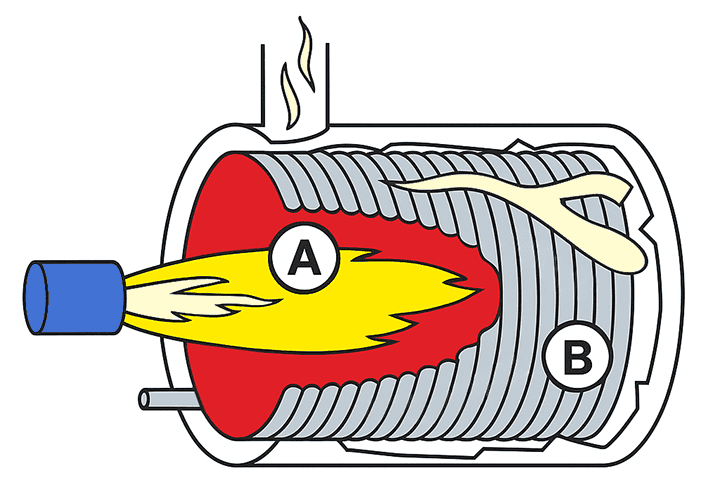
Double helical coils are wound in a spiral and layered one inside the other, which increases heat transfer surface area and absorbs more heat before the gases exit the stack.
In the radiant section (A), heat is transferred by direct radiation to the inside surface of the inner coil.
In the convection section (B), hot gases pass over the outer surface of the inner coil and both surfaces of the outer coil.
The outer coil captures heat that would otherwise be lost, improving recovery and thermal efficiency.
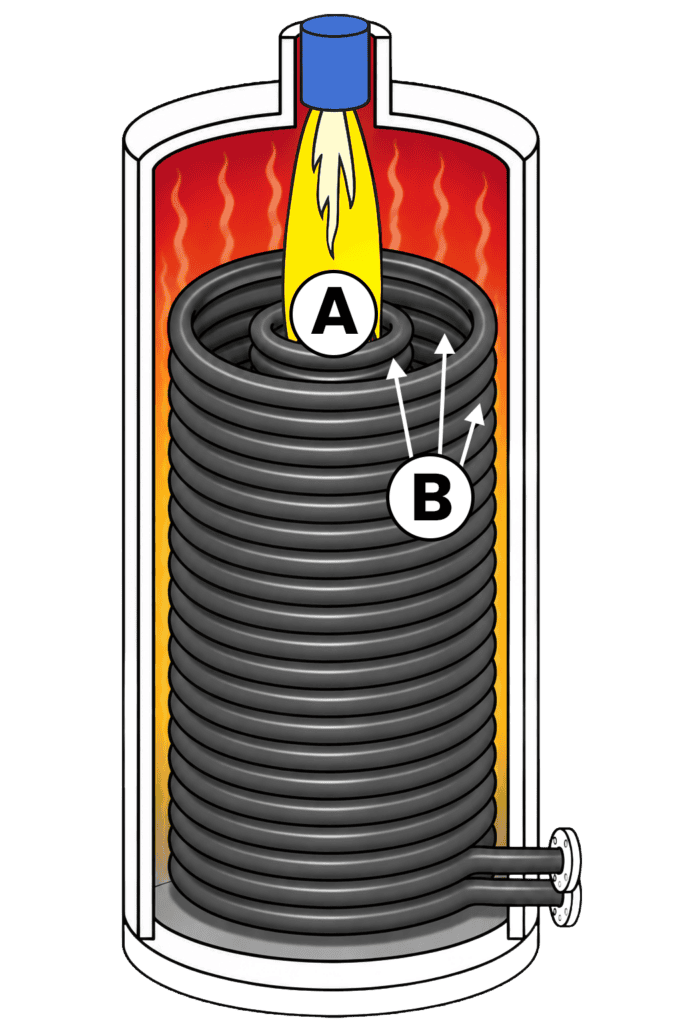
Helical Coil Heat Exchange
Helical coils are wound in a spiral and heated primarily from one direction.
In the radiant section (A), heat transfers by direct radiation to the inside surface of the coil.
In the convection section (B), hot gases pass over the outside of the coil before leaving the stack at a higher temperature.
This design is typically more compact and economical.
Thermal Fluid Heater Applications
Enerquip industrial thermal fluid heaters serve a wide range of industries and processes, including:
- Alkyd paints and resin kettle heating.
- Asphalt preheating
- Biofuels blending
- Chemical process heating
- Hot oil steam generation
- Lube oil and fuel oil heating
- Petroleum refining
- Rubbers, plastics, and paper processing heat
- Tanker and barge heating
- Tank terminal heating
- Synthetic fiber production, surface coatings, curing
Some organizations in these industries still rely on steam boilers for industrial heating. If that’s you and you’re considering a switch to thermal fluid heat, we highly recommend it. Find out why hot oil is often preferred over steam.
Choose Enerquip for Thermal Fluid Heaters
If you’re replacing or upgrading your heating equipment, Enerquip can help. Our skilled engineers will assess your heating needs and design a thermal fluid heater that increases your plant’s efficiency. Request a quote today.
Past Thermal Fluid Heating Projects


