When purchasing industrial heating equipment, it can be tempting to source individual components from different manufacturers to get the lowest price. But while this approach may reduce upfront costs, it can also create challenges with equipment compatibility, installation, and long-term support.
Purchasing a complete industrial heating system from one supplier can simplify the process while helping ensure all components work together as intended. From equipment selection to technical support, a coordinated approach can save time, reduce unexpected costs, and improve system reliability.
Here’s what to consider when deciding between a complete heating system and individually sourced components.
What Is a Complete Industrial Heating System?
A complete industrial heating system includes the equipment needed to generate, circulate, control, and transfer heat throughout an industrial process.
In a thermal fluid heating system, heat transfer fluid circulates through a heater, absorbs heat, and delivers it to process equipment. Each component must be properly sized and selected to maintain the required temperatures, pressures, and flow rates.
Depending on the application, a complete thermal fluid heating system may include:
- Thermal fluid heater to generate the required process heat
- Circulation pumps to maintain proper fluid flow
- Expansion tank to accommodate changes in fluid volume as temperatures increase
- Temperature controls and instrumentation to monitor and regulate system operation
- Piping and valves to direct and control fluid circulation
- Heat exchangers to transfer heat to process equipment, when needed
- Safety and monitoring equipment to help protect the system during operation
While these components can be purchased separately, they must be properly integrated to deliver reliable performance. Working with one supplier allows the equipment to be selected and coordinated as a complete system rather than as individual pieces.
5 Benefits of Buying a Complete Industrial Heating System
1. Better Equipment Compatibility and Performance
Industrial heating systems rely on multiple components working together. Even when individual pieces of equipment meet their specifications, they may not perform as expected when combined.
For example, a circulation pump must provide the proper flow rate and pressure for the heater and the overall system. An incorrectly sized pump can create circulation problems that affect heat transfer, temperature control, and equipment reliability.
Similarly, heaters, controls, and safety devices must be properly coordinated to maintain consistent operating conditions.
When purchasing a complete heating system from one supplier, components can be engineered and selected for the specific application. This helps reduce compatibility issues and supports reliable performance from startup through daily operation.
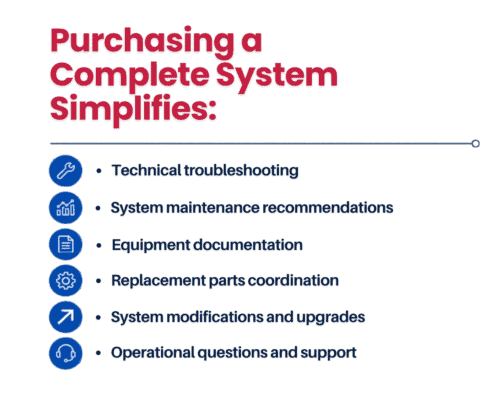
2. One Point of Contact for Support and Troubleshooting
When equipment comes from multiple manufacturers, determining responsibility for a problem can become complicated.
If a system experiences inconsistent temperatures or inadequate circulation, the issue could involve the heater, pump, controls, or another component. Your maintenance team may need to contact several manufacturers to identify the cause and coordinate a solution.
With a complete system purchased through one supplier, you have a primary point of contact familiar with the overall equipment configuration.
This can simplify communication during installation, startup, troubleshooting, and routine maintenance. Rather than addressing each component separately, your team can work with a supplier that understands how the equipment operates together.
Individual warranties and service responsibilities may still vary, so it’s important to confirm the available support before purchasing.
3. Simplified Purchasing and Project Coordination
Purchasing industrial heating equipment involves more than comparing prices. Engineering teams, purchasing departments, and project managers must coordinate equipment specifications, proposals, delivery schedules, and installation requirements.
When components are sourced individually, each manufacturer may have different:
- Quoting and purchasing procedures
- Equipment lead times
- Payment terms and warranty conditions
- Shipping arrangements
- Technical documentation requirements
Working with one supplier can consolidate many of these responsibilities into a more coordinated purchasing process.
A complete system proposal also makes it easier to understand the equipment being supplied, evaluate project costs, and plan deliveries around installation schedules.
For facilities managing complex projects or working with limited internal resources, this approach can reduce administrative work and simplify communication.
4. Fewer Unexpected Integration Costs
The lowest equipment price doesn’t always result in the lowest overall project cost.
Purchasing individual components may appear more affordable initially, but additional expenses can arise when equipment requires modifications or doesn’t operate as expected once installed.
Potential costs include:
- Additional engineering or system redesign
- Equipment modifications or replacements
- Installation and startup delays
- Additional labor and troubleshooting
- Unplanned production interruptions
For example, discovering during startup that a circulation pump cannot provide the required flow may lead to equipment changes, additional engineering, and project delays.
Purchasing a complete industrial heating system from one supplier can help reduce these risks by addressing component compatibility during the design and equipment selection process.
Although a complete system isn’t guaranteed to have the lowest initial price, it can provide greater cost predictability and help avoid unnecessary integration expenses.
5. Better Long-Term Operating Efficiency
An industrial heating system is a long-term investment. Beyond the initial purchase, energy consumption, maintenance, equipment reliability, and downtime all contribute to its total cost of ownership.
Properly matched components help the system maintain the required heat output, fluid circulation, and temperature control.
For example, a heater and circulation pump selected to work together can help maintain the fluid flow needed for effective heat transfer. Proper controls also help regulate operating temperatures based on process requirements.
A coordinated system design can support efficient operation, simplify maintenance planning, and make future equipment modifications easier to manage.
When comparing heating system proposals, consider not only the purchase price but also the expected operating and maintenance requirements over the equipment’s service life.
Complete Heating System vs. Purchasing Individual Components
Both purchasing approaches can be successful when equipment is properly engineered and integrated. The main difference is who takes responsibility for coordinating the system.
| Consideration | Complete System From One Supplier | Individually Sourced Components |
| Equipment compatibility | Components selected as a coordinated system | Compatibility must be verified across suppliers |
| Purchasing | More consolidated purchasing process | Multiple quotes, orders, and supplier relationships |
| Project coordination | One primary equipment supplier | Greater coordination by the facility or contractor |
| Technical support | Central point of contact for system-related questions | May require contacting multiple manufacturers |
| Integration costs | Potentially fewer unexpected integration expenses | Additional engineering or modifications may be needed |
| System customization | Equipment selected around application requirements | Components selected and integrated individually |
When does a complete system make the most sense?
A complete industrial heating system may be particularly beneficial when installing a new system, replacing aging equipment, expanding production, or working with limited internal engineering resources.
Purchasing individual components may be more practical when replacing specific equipment within an existing system or when the facility already has detailed engineering specifications and the resources to manage integration.
What to Look for in an Industrial Heating System Supplier
Not every supplier defines a “complete heating system” the same way. Before making a purchasing decision, it’s important to understand what’s included and what responsibilities remain with your facility or engineering contractor.
Confirm the Equipment and Services Included
Ask for a detailed proposal identifying the heaters, pumps, tanks, controls, safety equipment, and accessories included in the system.
Also clarify whether the supplier provides piping, electrical connections, installation assistance, startup support, or commissioning services.
Understanding the complete scope of supply helps prevent unexpected costs and ensures responsibilities are clear before the project begins.
Evaluate Engineering Experience and Technical Support
Look for a supplier with experience designing heating solutions for applications similar to yours.
A knowledgeable supplier should understand your process requirements, including:
- Required heating capacity and operating temperatures
- Thermal fluid circulation and pressure requirements
- Equipment layout and available installation space
- Safety and control requirements
- Future maintenance and expansion needs
The supplier should also be able to explain how the proposed components work together and what technical assistance is available after delivery.
Frequently Asked Questions About Complete Industrial Heating Systems
Is It Better to Buy an Industrial Heating System From One Supplier?
For many facilities, yes. Purchasing a complete system can simplify equipment integration, purchasing, and technical support. It’s especially beneficial for new installations or projects requiring several coordinated components.
Can Industrial Heating Components From Different Manufacturers Work Together?
Yes. Components from different manufacturers can operate together when properly sized, selected, and integrated. However, additional engineering and coordination may be required to ensure reliable system performance.
Does Buying a Complete Industrial Heating System Save Money?
It can. While the initial purchase price may not always be lower, a coordinated system can help reduce unexpected integration costs, equipment modifications, and startup delays. Actual savings depend on the application and project requirements.
What Equipment Is Included in a Complete Thermal Fluid Heating System?
A complete system typically includes a thermal fluid heater, circulation pumps, expansion tank, controls, and necessary safety equipment. Additional components, such as heat exchangers, piping, and accessories, depend on the application and supplier’s scope of supply.
Complete Industrial Heating Systems From Enerquip
At Enerquip, we understand that reliable industrial heating requires more than a quality heater. Every component must work together to deliver the heat your process demands.
Our thermal fluid heating solutions can bring together heaters, circulation pumps, expansion tanks, controls, and supporting equipment into a coordinated system designed around your application’s requirements.
Whether you’re replacing an existing heater, expanding production, or planning a new installation, our team can help you evaluate your heating needs and identify the right equipment for your process.
Ready to simplify your next industrial heating project?
Explore Enerquip’s Thermal Fluid Heating Solutions or contact our team to discuss your application and request a custom quote.