
Facilities that rely on heat intensive equipment often release a significant amount of usable energy through hot exhaust gases. Industrial waste heat recovery captures that energy and redirects it into other processes, helping plants improve efficiency, reduce fuel consumption, and lower operating costs.
What Is Industrial Waste Heat Recovery?
Industrial waste heat recovery is the process of capturing heat from exhaust gases produced by equipment such as:
- Incinerators and thermal oxidizers
- Turbines, furnaces, and boilers
- Gasifiers, ovens, and industrial dryers
Instead of allowing high-temperature exhaust to escape unused, a waste heat recovery unit transfers its thermal energy to another fluid or process. The recovered heat may be used to preheat combustion air, heat water or thermal fluid, generate steam, support facility heating, or reduce the load on boilers and other heating equipment.
In simple terms, waste heat recovery allows a facility to reuse heat that would otherwise be lost.
Why Is Waste Heat Recovery Important?
Industrial operations require substantial amounts of energy. When heat exits a process without being reused, the facility loses energy that has already been paid for.
Recovering that heat can support several operational, financial, and environmental goals.
Increased Energy Efficiency
Waste heat recovery improves overall process efficiency by extracting more useful energy from the same amount of fuel. For example, recovered exhaust heat can preheat air or process materials before they enter another piece of equipment, which can shorten heating cycles, reduce equipment loads, and improve the efficiency of downstream processes. Because those materials require less additional heating, the facility also reduces the amount of fuel needed to reach the desired operating temperature.
Even when the recovery system does not eliminate the need for another heat source, it can reduce that source’s workload.
Lower Energy Consumption
Industrial heating equipment often represents a major portion of a facility’s energy use. Reusing heat from exhaust streams can reduce demand for natural gas, electricity, oil, or other fuels.
The amount of energy saved depends on exhaust temperature, flow rate, operating schedule, process heat requirements, heat exchanger design, equipment condition, and the distance between the heat source and the intended application.
A properly engineered system matches the available waste heat with a useful and consistent demand elsewhere in the facility.
Resource Conservation
Fuel and energy resources should be used as efficiently as possible. Waste heat recovery supports resource conservation by extending the value of energy that has already been consumed.
In some applications, recovered heat can partially or fully replace a separate heating process. This reduces the need to generate additional thermal energy and helps the plant use fewer resources overall.
Reduced Heat Waste
Manufacturing and thermal processing naturally produce waste streams. While not every form of waste can be reused, high-temperature exhaust often contains recoverable energy.
A waste heat recovery system redirects some of that energy back into the operation rather than allowing it to dissipate into the environment.
More Productive Use of Treated Exhaust
Some industrial exhaust gases must be treated or incinerated before release. After treatment, those gases may still contain substantial thermal energy.
A heat recovery system can capture part of that remaining energy and redirect it into a productive application. The system does not replace required emissions-control equipment, but it can improve the overall efficiency of the process.
Reduced Demand on Existing Equipment
When recovered heat supports a process, primary heating equipment may not need to operate as intensively. Depending on the application, this may reduce wear and help extend maintenance intervals.
Lower Operating Costs
Recovering usable thermal energy can reduce the amount of fuel required by boilers, burners, heaters, and other equipment, helping lower the cost of maintaining required process temperatures. Over time, these fuel savings may help offset the cost of designing, manufacturing, and installing the recovery system.
Additional financial benefits may include improved production efficiency, longer equipment service life in some applications, and greater protection from energy-price volatility.
Actual savings vary by facility, so a detailed engineering and economic analysis should be completed before selecting a system.
Support for Sustainability Goals
Using energy more efficiently may help a facility reduce fuel consumption and associated emissions. Waste heat recovery can therefore support broader energy-management and sustainability initiatives while also delivering operational benefits.
What Is a Waste Heat Economizer?
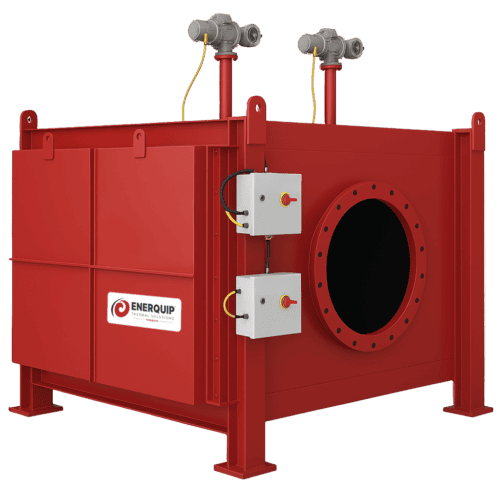
A waste heat economizer is a common type of heat recovery equipment. It is designed to transfer thermal energy from a hot exhaust stream to another gas, liquid, or process material.
Depending on the application, a unit may be designed to heat air, water, thermal fluid, oil, asphalt, process gases, boiler feedwater, or other industrial materials.
Waste heat economizers are often custom-engineered because exhaust conditions, temperatures, materials, pressure requirements, and process needs can differ significantly from one facility to another.
How Does a Waste Heat Economizer Work?
Hot exhaust gas enters the economizer and passes across heat-transfer surfaces, typically tubes or pipes. Heat moves through those surfaces into air, water, oil, or another fluid inside the pipes, which is then routed to a useful process elsewhere in the facility. The cooled exhaust continues through the facility’s ductwork, emissions-control equipment, or stack.
The system must be designed carefully to maintain proper airflow, control pressure drop, withstand operating temperatures, and resist corrosion or material buildup.
Common Industrial Waste Heat Recovery Applications
Waste heat recovery technology can be used in many heat-intensive industries, including asphalt production, chemical processing, food processing, metal processing, pulp and paper manufacturing, power generation, refining, industrial coating, waste treatment, and building materials manufacturing.
Common uses include:
- Preheating combustion air or process materials
- Heating thermal fluid, water, oil, or asphalt
- Producing steam or hot water
- Supporting facility and process heating
Is Waste Heat Recovery Right for Your Facility?
Waste heat recovery is most practical when a facility has both a consistent source of high-temperature exhaust and a nearby process that can use the recovered energy.
Important evaluation factors include exhaust-gas temperature and volume, operating hours, process consistency, available space, ductwork layout, pressure-drop limitations, corrosion risks, particulate levels, maintenance requirements, expected energy savings, and payback period.
A professional assessment can help determine how much heat is available, how it can be used, and which heat exchanger configuration is best suited to the application.
Invest in a More Efficient Industrial Heating Process
Industrial waste heat recovery allows plants to convert unused exhaust energy into a valuable resource. A well-designed system can reduce energy consumption, lower operating costs, improve process efficiency, and support long-term sustainability goals.
Enerquip designs and manufactures industrial heat exchangers and thermal equipment for demanding process applications. Our team can evaluate your operating conditions and help develop a system suited to your facility’s temperatures, materials, flow rates, and performance requirements.
Contact Enerquip to discuss your waste heat recovery application and explore available heat exchanger solutions.
More from the Enerquip Blog
Unlocking Energy Savings: How to Leverage Economizers and Waste Heat Recovery Units
How Almost Any Industry Can Benefit from Waste Heat Recovery
Waste Heat Recovery Systems Reduce Operational Expenses in Cement Plants