What Is a Bayonet Immersion Heater?
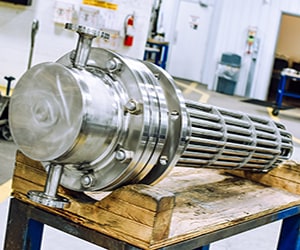
A bayonet immersion heater is an in-tank heater designed to transfer heat directly to stored liquids through a fully immersed tube bundle. Commonly used in industrial storage tanks, bayonet heaters provide efficient temperature control for viscous, corrosive, or temperature-sensitive fluids.

Carbon Steel Bayonet Heaters
How Bayonet Heaters Work in Storage Tanks
Bayonet immersion heaters are installed through a flanged tank connection. Once inserted, the tube bundle is fully immersed in the tank’s contents. A heating medium, such as steam, hot oil, or glycol, flows through the internal tubes, transferring heat directly to the surrounding fluid.
Each heater includes a:
- Tube sheet
- Tube bundle
- Bonnet with utility connections
- Optional shell section for easy removal of channel
Because heat transfer occurs directly inside the tank, bayonet heaters provide reliable and efficient temperature maintenance across the entire tank.
Benefits of Bayonet Immersion Heaters
Bayonet heaters are widely used for industrial tank heating because they offer:
- Direct in-tank heat transfer
- Efficient heating for viscous liquids like bitumen and heavy oils
- Compact design for space-limited tanks
- Simple flange installation
- Easy maintenance and service access
- Durable construction for high temperatures and corrosive materials
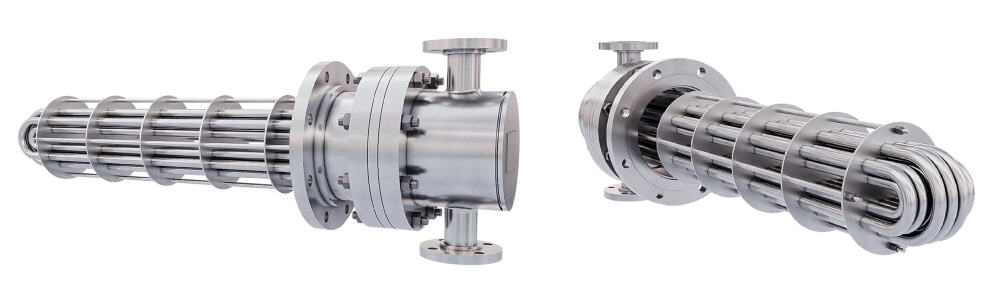
Available in carbon steel, 316L stainless steel, or higher alloys, these heaters are built for demanding industrial environments.
Stainless Steel Bayonet Heaters
Types of Bayonet Immersion Heaters
Enerquip offers multiple bayonet heater designs to match specific process and performance requirements.
Traditional Bare Tube Bayonet Heater
Bare tube bayonet heaters feature a straightforward design with exposed heating tubes. This configuration allows direct heat transfer to the surrounding fluid, making it ideal for applications that require a simple and reliable tank heating solution.
Helically Wound Finned Bayonet Heater
Helically wound finned heaters include spiral fins wrapped around the heating tubes. These fins increase surface area and improve heat transfer efficiency, making them well suited for applications requiring higher performance or faster heat-up times.
Pipe-in-Pipe Bayonet Heater
The pipe-in-pipe design features smaller internal tubes housed within a larger outer pipe. External fins (2 to 6 inches in length) extend from the outer pipe, increasing heat transfer surface area. This compact yet powerful design is effective in applications with space constraints or high heating demands, particularly for viscous liquids.
Double Pipe Bayonet Heater
Double pipe bayonet heaters are designed with two concentric pipes, one housing the heating element and the other surrounding it. This configuration creates a thermal barrier, where the fluid flows through the annular space between the two pipes, ensuring consistent and even heat distribution along the entire length of the heater. This design is ideal for applications requiring precise temperature control.
Bayonet Immersion Heater Applications
Bayonet immersion heaters are used across a wide range of industries for tank heating and temperature maintenance.
Chemical Processing: Used to heat acids, solvents, and other corrosive liquids stored in industrial tanks.
Oil & Gas: Applied in storage tanks and pipeline transfer stations to maintain flowable product viscosity.
Asphalt: Maintain pumpable viscosity in bitumen storage tanks without overheating the product.
Food & Beverage: Used for heating or cooling dairy products, edible oils, sauces, and other liquid ingredients.
Pharmaceutical: Provide temperature control for tanks containing solvents, active ingredients, and specialty chemicals.
Water Treatment: Heat process water and chemicals, or prevent freezing in open-top tanks in colder climates.
Power Generation: Support steam and process heating applications in industrial facilities.
When to Choose a Bayonet Immersion Heater
A bayonet heater is often the right choice when:
- The entire tank requires consistent temperature control
- Product viscosity must remain stable
- The application involves high temperatures or corrosive fluids
- Installation space is limited
- Reliable, low-maintenance operation is critical
Bayonet Immersion Heaters from Enerquip
Whether heating a small laboratory vessel or a large industrial storage tank, Enerquip designs bayonet immersion heaters to meet specific process requirements.
Available materials include:
- Carbon steel
- 316L stainless steel
- Higher alloys for demanding environments
If you need reliable industrial tank heating equipment built for long-term performance, let’s discuss your application. Request a quote today.
Frequently Asked Questions
Past Projects