Vapor Condensers Engineered for Performance
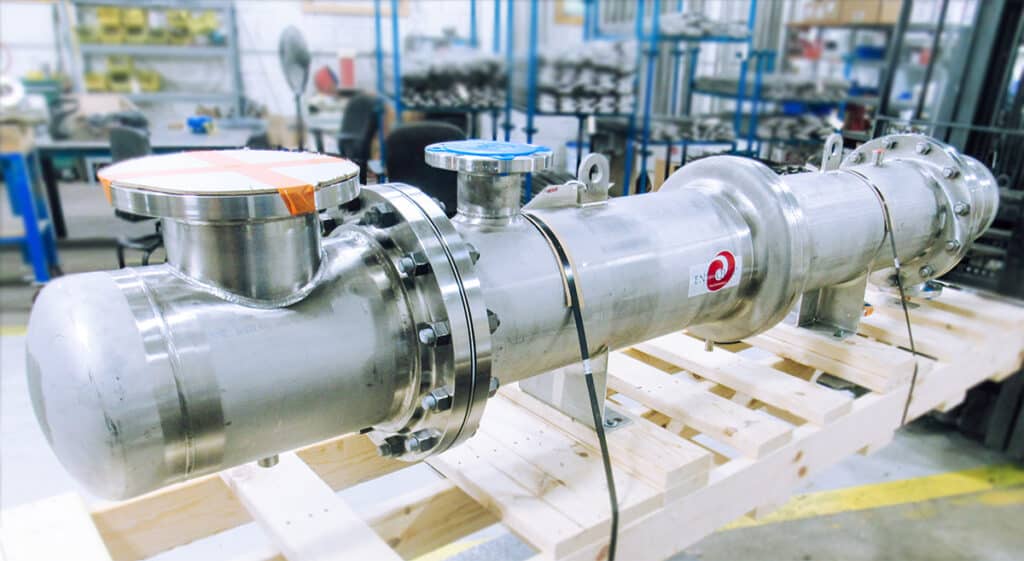
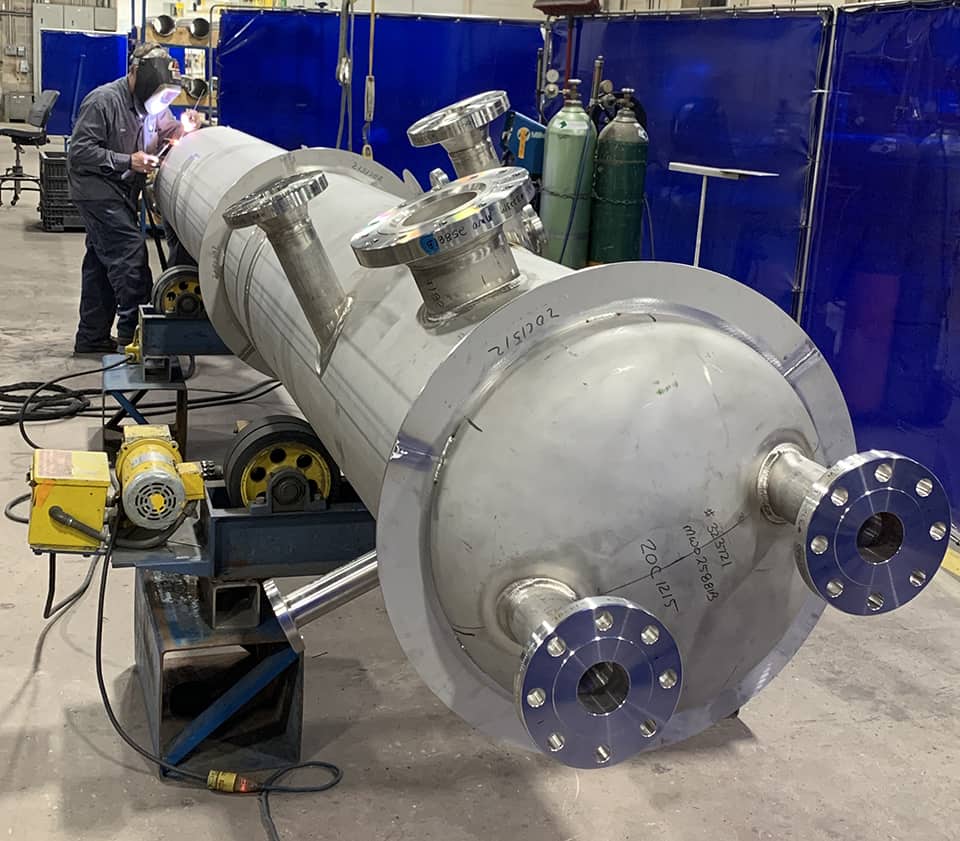
Enerquip’s stainless steel vapor condensers are engineered to deliver long-lasting, efficient performance—whether you’re recovering valuable product or managing emissions. Built to meet ASME and TEMA standards, our condensers are trusted across industries with a variety of process requirements and space constraints.

What is a Vapor Condenser?
Vapor condensers work by cooling a vapor to the point where it condenses back into a liquid. The vapor is passed through a heat exchanger, where it comes into contact with a cooler surface—typically a tube or a series of tubes. The cooler surface causes the vapor to lose heat, and as a result, condenses back into liquid.
The condensed liquid then flows out of the heat exchanger and may be collected in a separate container, while any remaining vapor is released into the atmosphere or directed back into the process from which it originated.
Our custom condensers are used in a variety of industries to recover valuable products or to reduce emissions of harmful gases into the atmosphere, including:
- Power generation and renewable energy
- Chemical processing
- Refrigeration
- Food and beverage
- Pharmaceuticals and cannabis
Flexible Designs for Custom Applications
We offer flexible design options to meet the needs of nearly any application.
- Sizes: Up to 48” diameter or larger depending on weight
- Styles: U-tube, straight tube, single-pass, multi-pass
- Materials: 304L SS, 316L SS, Duplex, Hastelloy, AL-6XN
- Standards: TEMA, ASME, 3-A, PED and CRN
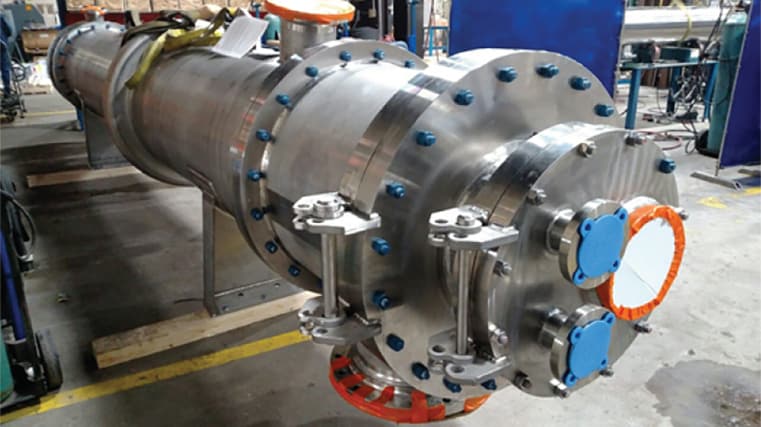
- Add-ons: Electropolishing, passivation, CIP spray balls, sight glasses, level ports, collection sumps, and more
Styles for Every Industry and Process
We design and build vapor condensers for a wide range of industries, with each project tailored to meet specific process needs. Below are some of the condenser styles we build.
Solvent Recovery Condensers
Use: Controlling emissions and recovering valuable solvents
They function by condensing vapors, allowing the condensed liquid to be collected and reused or safely disposed of. These condensers can operate under both vacuum and pressure conditions, ensuring efficient solvent recovery and emission control.
Reflux Condensers
Use: Condensing vapors and returning the condensate back to the process
Typically mounted directly on a tank or reactor vent flange, they cool the rising vapors, causing them to condense and drip back into the tank. This efficient vapor condensation and reflux action improve process control and efficiency. Reflux condensers can also be designed as stand-alone units, mounted vertically or horizontally.
Knock-back Condensers / Cold Trap Condensers
Use: Capturing and condensing vapors
Designed as vertical U-tube units with a removable tube bundle, they allow vapors to contact the cooled tubes and condense. The condensate then drains out the bottom of the shell, ensuring efficient vapor condensation and removal. These condensers can include an extended shell section to collect condensate away from the tube bundle.
Pharmaceutical Condensers
Use: Ensures the purity of product streams during condensation
Featuring polished product contact surfaces and sanitary tri-clamp connections designed to Pharmaceutical ASME-BPE standards, they maintain the highest levels of hygiene. These condensers typically condense vapors on the tube side of the exchanger and are designed with double tube sheets. Electropolished tube-side finishes and various materials, including 304L SS, 316L SS, or higher alloys, are available.
Terpene & Oil Condensers
Use: Ensures product quality and safety under extreme temperature and pressure conditions
With a focus on sanitary design and ASME certifications, these condensers maintain the integrity of the product stream while meeting all safety requirements. They efficiently condense vapors, allowing the collection of high-purity essential oils and CBD extracts.
Emissions Abatement Condensers
Use: Capturing and condensing volatile organic compounds (VOCs) and other hazardous vapors emitted during industrial processes
These vapors are cooled in the condenser, transitioning from gas to liquid. The condensed liquids are then collected for safe disposal or recycling, reducing the amount of harmful emissions released into the atmosphere. By removing VOCs and other pollutants from the exhaust stream, vapor condensers improve air quality and ensure compliance with environmental regulations.
Vacuum Systems Condensers
Use: Creating and maintaining efficient vacuum conditions
They remove condensable vapors from the system, preventing potential damage to vacuum pumps and reducing efficiency losses. This vapor removal reduces the load on vacuum pumps, leading to lower energy consumption and operational costs. Additionally, vapor condensers are designed with minimal pressure drop to maintain stable vacuum levels. This is critical for processes requiring precise pressure control, such as chemical reactions and material processing.
Why Enerquip?
Our engineers bring decades of experience designing ASME- and TEMA-compliant heat exchangers. From concept through fabrication, we work closely with our clients to deliver tailored solutions that perform.
Contact us today for a quote or to learn more about our products and services.
Past Condenser Projects