
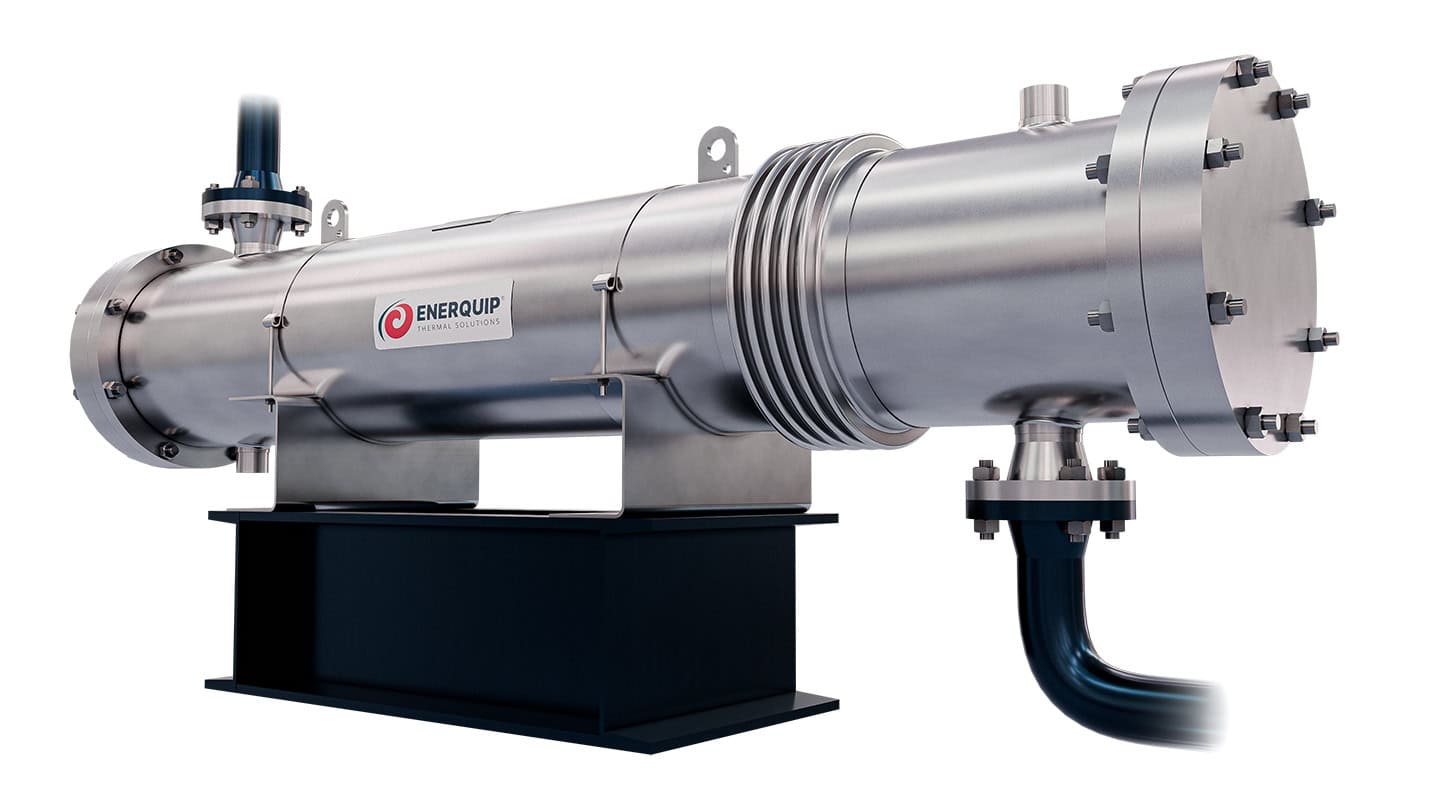
Thermal expansion is an unavoidable factor in the operation of shell and tube heat exchangers. As temperatures rise, the tubes and shell naturally expand — but not always at the same rate. Without proper compensation, these dimensional changes can lead to stress, distortion, leaks, or even catastrophic equipment failure.
Expansion joints are a proven solution to reduce this thermal stress. However, not all expansion joints are created equal. Understanding the differences between metal expansion bellows and packed slip expansion joints will help you determine which design best fits your application.
Why Expansion Joints Matter in Heat Exchangers
Because tubes and shells often expand differently due to material properties and temperature variations, unmitigated thermal movement can create:
- Tube-to-shell interference
- Damage to the tube sheet
- Excessive pressure on welds and structural components
- Long-term reliability and maintenance issues
Expansion joints absorb this movement, protecting the mechanical integrity of the exchanger and extending overall service life.
Two of the most commonly used designs are metal expansion bellows and packed slip expansion joints. Each option offers unique advantages — and important limitations.
Metal Expansion Bellows
Metal expansion bellows, sometimes called packless expansion joints, absorb movement through their flexible, convoluted design. They can be internally or externally pressurized, and their wall thickness varies based on the requirements of the operation.
Internally Pressurized Bellows
Internally pressurized bellows are popular because they:
- Are simple to inspect
- Offer a cost-effective solution
- Work well for modest thermal expansion requirements
However, these bellows are not ideal for large axial movements. Under high pressure or long-length conditions, they can experience instability, often referred to as “squirm,” which may lead to premature failure.
Best for:
Applications with small to moderate axial movement, limited pressure, and a need for easy inspection.
Externally Pressurized Bellows
Externally pressurized designs provide:
- Significantly higher axial movement capability
- Protection within a robust outer pipe
- Increased safety because the outer pipe contains pressure and shields the system if the bellows fail
- Options for self-draining configurations and leakage-limiting features
These units excel in environments with high thermal stress where internally pressurized designs may not perform reliably.
Best for:
High-movement, higher-pressure applications where reliability and safety are top priorities.
Choosing the Right Bellows Wall Thickness
Bellows are engineered with thin, medium, or thick walls depending on the operational loads, pressure, and flexibility required.
Thick-Walled Bellows (4–13 mm)
- Extremely durable
- Limited flexibility
- Typically include only two to three tall convolutions
- Often used in fixed tube sheet heat exchangers
Best for: High-pressure applications where movement is relatively small.
Medium-Walled Bellows (2–4.5 mm)
Designed as a balance between strength and flexibility, medium-walled bellows:
- Offer more durability than thin-walled models
- Provide more flexibility than thick-walled options
- Use convolutions of moderate height
Best for: Situations requiring a compromise between pressure capacity and movement.
Thin-Walled Bellows (0.5–2 mm)
- Highly flexible
- Allow many convolutions with shorter heights
- More vulnerable to damage if not properly reinforced
- Manufactured using hydraulic forming or cold rolling
To increase strength, these can be built with multi-ply layers or supported by restraining rings.
Best for: Applications requiring significant movement with lower pressure demands.
Packed Slip Expansion Joints
Packed slip expansion joints (or simply slip joints) use a sliding sleeve that moves axially within the exchanger shell. Packing material between the sleeve and shell minimizes leakage while allowing movement.
Benefits of Packed Slip Expansion Joints
- Excellent for pure axial movement
- Commonly paired with packed floating head designs
- Often more economical than metal bellows
Packed slip joints are mechanically simple and effective for applications with straightforward movement requirements.
Limitations and Considerations
- Only accommodate linear axial movement — no lateral, angular, or rotational movement
- Packing materials can wear over time, increasing leakage risk
- Not recommended for processes where zero leakage or cross-contamination is critical
Best for: Budget-conscious applications where small leaks are tolerable and movement is strictly axial.
Which Expansion Joint Is Right for Your Heat Exchanger?
The ideal expansion joint depends on a combination of factors, including:
- Expected thermal movement
- Pressure conditions
- Required leak-tightness
- Inspection and maintenance needs
- Orientation and design of the heat exchanger
For many operations, externally pressurized bellows offer the best flexibility and durability. In others, packed slip joints provide a simpler and more cost-effective option.
Need Expert Guidance?
Selecting the right expansion joint can be complex. A knowledgeable engineer can evaluate your thermal loads, material compatibility, and operational requirements to ensure your heat exchanger performs reliably for the long term.
The engineering team at Enerquip specializes in custom heat exchangers and thermal-stress solutions. If you’d like help determining the most effective expansion joint for your application, we invite you to contact us today.