
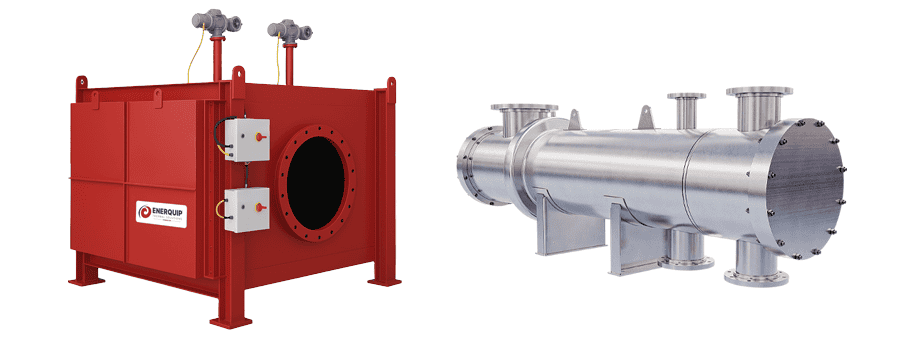
If your boiler stack is too hot to stand near, that heat isn’t just uncomfortable, it’s money leaving the facility.
Most fuel-fired equipment releases a large portion of its energy through flue gas or exhaust streams. That wasted thermal energy adds up fast, especially in plants running long hours or operating year-round.
The good news? Waste heat economizers and waste heat recovery heat exchangers are designed to capture that energy and reuse it. They help improve efficiency, reduce fuel spend, and lower emissions without changing your core process.
In this article, we’ll cover:
- The difference between economizers vs. waste heat recovery heat exchangers
- Where waste heat recovery works best across industries
- Payback expectations and key design considerations
- How to choose the right solution for your process
What Is Waste Heat Recovery?
Waste heat recovery is the process of capturing heat from exhaust gas, flue gas, or hot process streams, then transferring it into a useful medium such as:
- water
- thermal fluid
- glycol mixtures
- process air
- boiler feedwater
Instead of dumping high-value heat into the atmosphere, waste heat recovery equipment helps you reuse it for tasks like:
- generating steam or supporting boiler load
- preheating boiler feedwater or makeup water
- heating process fluids
- preheating combustion air
- space heating or absorption cooling
Waste Heat Economizer vs. Waste Heat Recovery Heat Exchanger: What’s the Difference?
These two terms get grouped together a lot, but they serve slightly different purposes and are often applied to different equipment.
Waste Heat Economizers
A waste heat economizer captures heat from flue gas and transfers it into:
- boiler feedwater
- process water
- combustion air (in some designs)
Best fit for:
- boilers
- thermal fluid heaters
- fired heaters
- furnaces and ovens
- thermal oxidizers (recover oxidizer exhaust heat to preheat combustion air, process air, or generate hot water/steam)
Main benefit: Reduce fuel consumption by lowering the load on the primary heater or boiler. In thermal oxidizer applications, recycle high-temperature exhaust heat back into the process to help reduce burner demand while maintaining stable operating conditions and compliance performance.
Waste Heat Recovery Heat Exchangers
A waste heat recovery heat exchanger transfers energy from any of the following into a secondary fluid or process loop. They are often used when exhaust streams are too hot or too valuable to waste, and when the recovered heat can be tied directly into an existing hot water, thermal oil, or steam system.
- engine exhaust
- turbine exhaust
- hot process vents
- hot liquid discharge streams
Best fit for:
- generator sets
- gas turbines
- incinerators
- dryers
- kilns
- refinery and petrochemical processes
Main benefit: Turn waste heat into usable energy for steam, hot water, thermal oil heating, or process preheat.
Where Waste Heat Recovery Equipment Makes Sense (Across Industries)
Waste heat recovery isn’t a niche strategy. It’s widely used in energy-intensive industries where hot exhaust streams are consistent and fuel costs matter.
Common industries include:
- chemical and petrochemical
- refining
- food and beverage
- pulp and paper
- cement and aggregates
- steel and metals
- glass
- asphalt
- general manufacturing
- power generation and utilities
Practical Applications by Industry
Here are real-world examples of how waste heat economizers and waste heat recovery heat exchangers are applied in industrial plants:
Refining & Petrochemical
Fired heaters, furnaces, and process vents generate high-temperature flue gas. Waste heat economizers and heat exchanger-based recovery systems can:
- preheat boiler feedwater
- preheat process feeds
- support steam generation
- reduce heater firing rates
Result: fuel savings, reduced CO₂ emissions, and improved thermal efficiency.
Food & Beverage
Ovens, dryers, boilers, and fryers often run long hours. Waste heat recovery can support:
- washdown water heating
- boiler makeup water preheat
- process hot water loops
- space heating in production areas
Result: strong payback potential due to high runtime and consistent heat loads.
Pulp & Paper
Paper mills generate significant heat from recovery boilers, kilns, and dryer systems. Waste heat recovery units can help:
- reduce boiler load
- stabilize dryer air temperatures
- improve process heating efficiency
Result: improved energy performance without interrupting production flow.
Cement & Aggregates
Kilns and dryers produce a steady exhaust stream. Waste heat recovery systems can:
- preheat combustion air
- support drying operations
- reduce fuel demand during continuous runs
Result: better fuel efficiency and improved operating stability.
Steel & Metals
Furnaces and reheating ovens produce extreme waste heat. Depending on the exhaust stream, recovery systems can:
- preheat combustion air
- heat process water loops
- support facility hot water demands
Result: reduced fuel consumption and improved process control.
Power Generation (Engines and Turbines)
Generator sets and turbines release a major portion of energy through exhaust. Exhaust gas heat exchangers can:
- generate hot water or steam
- preheat process fluids
- provide facility heating
Result: better energy utilization and reduced fuel use per output.
Asphalt and Thermal Fluid Heating Operations
This is a strong fit for waste heat economizers and thermal fluid-compatible waste heat recovery units.
Typical applications include:
- preheating combustion air to boost burner efficiency
- reheating thermal fluid used for tank heating, piping, and storage
- supporting Warm Mix Asphalt systems using recovered heat
Result: reduced thermal fluid heater load, improved efficiency, and better temperature control.
ROI and Payback: What to Expect
Payback varies by application, but in many industrial environments, waste heat recovery projects often fall in the 1 to 5 year range.
Calculate your ROI when investing in a waste heat economizer.
Key factors that drive payback:
- operating hours per year
- fuel type and current fuel cost
- exhaust temperature and flow rate
- how much heat can be reused (and what it replaces)
- maintenance requirements and fouling potential
- system integration complexity
Fastest payback typically occurs when:
- equipment runs long hours (multi-shift or continuous operation)
- exhaust temperatures are consistently high
- recovered energy replaces fuel-fired heating or steam generation
Non-Monetary Benefits Plant Teams Care About
Even when fuel savings drive the ROI, waste heat recovery often improves operations in ways that matter day-to-day:
- reduced burner cycling
- improved process temperature stability
- increased boiler capacity without adding a new boiler
- lower cooling demand (less wasted heat dumping)
- reduced thermal stress on fired equipment
- lower emissions by reducing fuel use
These benefits can improve reliability and process control — two things that matter just as much as dollars.
Design Considerations: What Engineers Need to Size the Right System
Whether you’re installing a waste heat economizer or a waste heat recovery heat exchanger, good sizing depends on good data.
Here’s what your equipment supplier typically needs:
1) Exhaust or Flue Gas Conditions
- temperature range (min / normal / max)
- flow rate
- fuel type and combustion products
- particulate loading or contaminant risks
2) Target Heat Sink
- what will absorb the heat? (water, thermal fluid, glycol, air)
- inlet/outlet temperatures
- pressure requirements and controls
3) Pressure Drop Limits
Exhaust systems and burners often have strict allowable pressure drop. Designing within those limits is critical.
4) Materials and Corrosion Resistance
Flue gas composition and dew point can drive corrosion. Stainless steel and other corrosion-resistant materials are often used depending on conditions.
5) Maintenance and Cleaning Access
If your system is prone to fouling, design choices should support:
- inspection access
- cleaning capability
- removable bundles or access doors
- appropriate drain and vent points
Quick Feasibility Checklist
Want to estimate how much energy you can recover (and what the payback could look like)? Gather these basics:
🔲 Exhaust / flue gas temperature range
🔲 Exhaust flow rate (or equipment model & size)
🔲 Fuel type and current fuel cost
🔲 Operating hours per year
🔲 What you want to heat (water, thermal fluid, combustion air, etc.)
🔲 Any known fouling or corrosion concerns
With this information, an equipment supplier can quickly estimate recoverable energy and help determine the best option for your plant.
Ready to Put Your Waste Heat to Work?
Waste heat economizers and waste heat recovery heat exchangers can significantly reduce energy costs and improve efficiency, especially when they’re properly sized and integrated.
At Enerquip, we design and manufacture industrial heat exchanger solutions for demanding service conditions, including waste heat recovery systems, economizers, and custom heat exchanger designs built for your process.
Waste heat recovery isn’t one-size-fits-all. Systems must balance heat transfer, pressure drop, and long-term serviceability, which is why engineered heat exchangers often outperform off-the-shelf solutions in demanding industrial environments.
Want a quick feasibility check? If you can share stack temperature, operating hours, fuel type, and what you want to heat, we can help estimate recoverable energy and payback.
Contact Enerquip or request a quote to explore a waste heat recovery solution for your plant.
More from the Enerquip Blog
Mastering Thermal Efficiency: A Complete Guide to Thermal Fluid Heating Systems
Heat Exchanger Material Guide: Factors That Impact Performance and Lifespan
What Is Thermal Shock vs. Thermal Fatigue (and How to Prevent Both)?
Serpentine vs. Helical Coil Heaters: Understanding the Differences
Preparing Your Asphalt Plant Heating Equipment For Production Season
How Pinch Analysis Can Unlock Energy Savings in Your Facility