
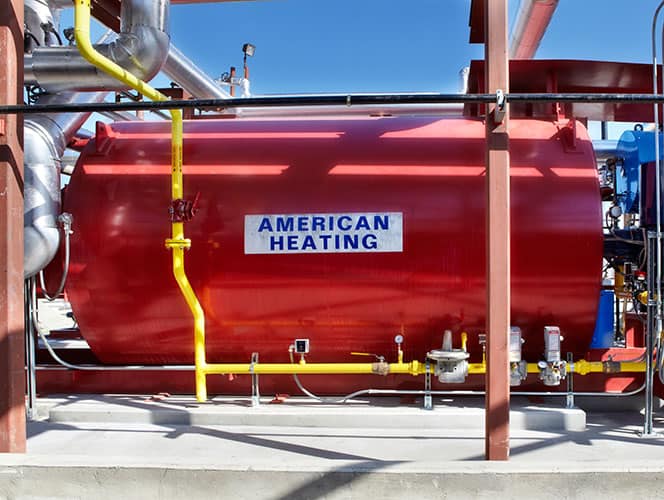
When it comes to industrial process heating, both steam boilers and thermal fluid (hot oil) heating systems have long served as dependable solutions. However, as efficiency, safety, and cost-effectiveness become top priorities across industries, more facilities are discovering that thermal fluid systems offer significant advantages over traditional steam setups.
Let’s take a closer look at how hot oil systems compare to steam boilers—and why so many manufacturers, processors, and production facilities are making the switch.
1. Greater Energy Efficiency
Hot oil heating systems operate on a closed-loop design that minimizes heat loss and maximizes energy transfer. Unlike steam, which must constantly convert water to vapor and then back to liquid, thermal fluids circulate continuously—providing consistent heat with less fuel consumption.
This efficient operation allows plants to:
- Achieve higher operating temperatures (up to 650°F) without pressurization.
- Reduce fuel costs thanks to improved heat transfer and lower system losses.
- Maintain steady, uniform temperatures that enhance process control and product quality.
In short, thermal fluid heaters deliver more usable heat energy to your process with less energy input.
2. Lower Maintenance and Operating Costs
Steam systems require frequent attention—managing water treatment, maintaining condensate return systems, and ensuring proper blowdown to remove impurities. Each of these steps takes time, resources, and additional equipment.
Hot oil systems simplify operations by eliminating many of these ongoing requirements:
- No water treatment chemicals or deaerators needed.
- No steam traps or condensate handling equipment to maintain.
- No blowdown losses or water disposal concerns.
Because thermal fluids do not corrode piping or components, system longevity increases while maintenance downtime decreases—resulting in lower lifecycle costs and improved system reliability.
3. Enhanced Safety and System Reliability
Steam boilers must operate under high pressure to reach elevated temperatures, which increases the risk of leaks, explosions, and other safety concerns. Thermal fluid heaters, on the other hand, achieve similar or higher temperatures at low or even atmospheric pressure.
This low-pressure design:
- Reduces risk to personnel and equipment.
- Simplifies compliance with safety regulations.
- Minimizes mechanical stress on system components.
Additionally, thermal fluids won’t freeze in cold climates and don’t cause corrosion, which helps protect critical infrastructure and prevent costly system failures.
4. Flexibility and Easy Integration
Hot oil systems can be installed as new systems or integrated into existing operations with relative ease. Their closed-loop design and smaller footprint make them ideal for a wide range of industrial applications—from chemical processing to asphalt production.
Because they operate efficiently and cleanly, thermal fluid heaters are also well-suited for facilities aiming to meet sustainability or emission-reduction goals.
5. Long-Term Cost Savings
While the initial setup costs for a thermal fluid system can be comparable to a steam boiler, the operating savings quickly add up. Lower fuel usage, reduced maintenance, and the absence of water treatment expenses all contribute to a lower total cost of ownership over time.
In addition, many facilities appreciate the simplicity of operation. In most states, thermal fluid heaters do not require a full-time, licensed boiler operator, reducing labor costs without compromising safety or performance. This can save upwards of $80,000 a year. Also with a thermal fluid heater, there is no need for a pretreating skid ($40,000), or deaerator ($40,000), or chemical injection system ($15,000), saving even more.
A Smarter, More Reliable Way to Heat
Thermal fluid heating systems offer a combination of efficiency, safety, and reliability that’s hard to match with traditional steam boilers. For many facilities, switching to hot oil heating means less maintenance, fewer operational interruptions, and greater control over critical processes.
Whether you’re looking to improve efficiency, reduce maintenance costs, or modernize your plant’s heating system, a thermal fluid heater may be the ideal solution. Contact us to get started today.
More from the Enerquip Blog
Thermal Fluid Heater Guide: Choosing the Right Heater for Your Facility
How to Prepare for Thermal Fluid Heating Equipment Installation
Retrofitting Industrial Heating Equipment: Important Things To Consider
How to Prepare Your Facility for a Thermal Fluid Heating System Installation
Behind the Burn: How Heat Transfer Systems Refine Aviation Fuel
How to Choose the Right Thermal Heating Fluid for Your System