
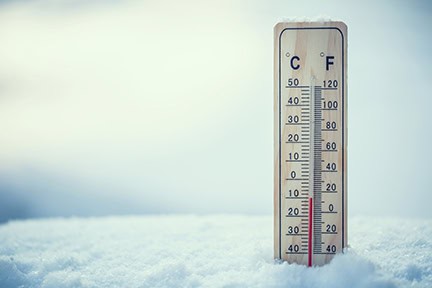
Cold-process systems are essential for products or processes that require consistently low temperatures. These applications demand equipment that stays reliable even when exposed to extreme thermal swings, making design and fabrication quality especially important.
At Enerquip, we engineer cold-process heat exchangers that maintain stable performance while protecting product integrity. Before diving into the design elements behind this type of equipment, let’s start with the basics.
What Is “Cold Process”?
“Cold process” refers to operations where fluids are cooled well below ambient temperature. In some cases, this is simply controlled chilling. In others, it can involve cryogenic conditions depending on the process.
What matters most isn’t the number on the thermometer—it’s what those temperatures do to the equipment.
When metal gets cold, it shrinks. When it warms back up, it expands. And when that cycle repeats over and over, stress builds at welds, joints, tube sheets, and mechanical connections. If the exchanger isn’t built to handle that movement, it can lead to cracking, misalignment, leaks, and fatigue failure over time.
Where Cold-Process Heat Exchangers Are Used
Cold-process systems show up across a wide range of industries. Any operation that relies on stable, predictable cooling typically has a low-temperature process stage. Common applications include:
- Aerospace and advanced engineering – temperature conditioning and fluid cooling
- Pharmaceuticals and biotech – protecting temperature-sensitive formulations
- Chemical processing – cooling reactions and stabilizing intermediates
- Food and beverage – chilling, cold storage, and process control
- Industrial manufacturing – cooling oils, fluids, and thermal equipment
Cold process doesn’t belong to one industry—it’s a design challenge that shows up anywhere low-temperature performance is non-negotiable.
What Makes Cold-Process Engineering Different?
Designing an exchanger for low-temperature operation involves far more than increasing heat transfer. It means building an exchanger that remains dependable as materials contract, stresses shift, and temperatures move rapidly.
Key engineering considerations include:
- Material Selection
Not all alloys behave the same at low temperatures. Stainless steel, such as 304L, is commonly used because it remains strong and ductile in cold service and provides strong resistance to thermal fatigue.
- Tube Sheet and Tube Joint Integrity
Cold cycles put stress on every connection, and tube joints are one of the most important areas to reinforce. Depending on service requirements, exchanger designs may incorporate:
- Roller expansion
- Seal welding
- Double-grooved tube sheets
- Joint designs that reduce movement and fatigue over time
The goal is simple: maintain a leak-free joint even through aggressive cycling.
- Flow Routing for Stable Performance
Cold-process exchangers often use a multi-pass configuration to balance heat transfer performance while managing pressure drop. Flow routing becomes especially important in low-temperature service because operating conditions can change quickly and dramatically.
- Stress Control During Fabrication
Cold process increases sensitivity to misalignment and distortion. Fabrication and assembly practices must be tightly controlled to ensure the exchanger stays aligned and stable through contraction forces.
That means extra attention to:
- Machining tolerances
- Welding sequence and heat control
- Tube alignment and support
- Final assembly and inspection practices
Welding for Cold Process
Enerquip welds every exchanger using qualified procedures and tight quality controls. For cold-process service, welding requirements are often more specific due to the effects of low temperatures and thermal cycling. This may include:
- Controlled heat input
- Application-specific filler material selection
- Enhanced inspection and testing
These steps help ensure weld integrity through repeated contraction forces and temperature swings.
Required Stamps and Certifications
Cold-process exchangers need to meet strict performance and safety standards. These typically include:
- Built to ASME Section VIII requirements and code-stamped.
- TEMA guidelines, with class B or R selected based on severity of service.
- Additional documentation or testing depending on the application
These certifications confirm that the equipment can operate safely under both high pressures and low temperatures.
A Look at Past Cold-Process Designs
Over the years, Enerquip has supported a wide range of cold-process applications. While every exchanger is engineered based on the operating conditions and process requirements, many cold-process designs share common features, including:
- Low-temperature-capable stainless steel, such as 304L
- Multi-pass process channel configurations, often machined from forgings for strength and reliability
- Heavy-duty connections and flanges, selected to support high pressure and minimize leak risk
- Seamless U-tubes, typically roller expanded and seal welded for long-term performance
- Vent and drain connections designed to remain accessible beyond insulation
- Insulated shell assemblies, often using chloride-free insulation materials with stainless steel jacketing
- ASME Code stamping and other documentation required for low-temperature service
These features come together to create durable, long-lasting exchangers built for the demands of cold operation.
Cold-Process Heat Exchangers from Enerquip Thermal Solutions
Cold-process heat exchangers serve a vital role across many industries, helping protect products and processes where tight temperature control is non-negotiable. With careful material selection, strict welding practices, and compliance with industry standards, Enerquip builds units that deliver reliable performance in even the coldest conditions.
Have a project that needs precise cooling? Let’s talk about the right design for your process.
More from the Enerquip Blog
- Heat Exchanger Helps Aloe Processor Improve Quality
- Enerquip’s National CRN Speeds Up Delivery, Reduces Cost
- How to Prevent Food Recalls in Your Production Facility: Essential Strategies for Safer, Cleaner Operations
- Horizontal vs. Vertical Baffles: Choosing the Right Design for Your Shell and Tube Heat Exchanger
- 7 Shell Configurations to Consider When Designing a Shell and Tube Heat Exchanger