Industrial heating equipment is a major investment, so it makes sense that many facilities try to extend the life of a thermal fluid heater for as long as possible. But waiting until a heater completely fails can create a much larger operational problem than planning for replacement in advance.
An unexpected industrial heating system failure can bring production to a standstill. Beyond the repair bill, your facility may face lost production, delayed shipments, overtime, damaged product, and limited time to evaluate replacement options.
That is why the best time to start thinking about thermal fluid heater replacement is often before the existing system reaches the end of its usable life.
The challenge is deciding when continued repairs are still practical and when replacement deserves serious consideration. Equipment age matters, but it should not be the only factor. Performance, maintenance history, reliability, parts availability, equipment condition, operating costs, and future production requirements all play a role.
Evaluating these factors early gives your team time to compare options, establish a budget, coordinate a planned shutdown, and select an industrial heating system that fits the needs of your process.
Signs It May Be Time to Replace Your Industrial Heating System
No single symptom automatically means an industrial heater needs to be replaced. In many cases, maintenance, burner service, cleaning, control adjustments, or component upgrades can restore reliable operation.
Replacement becomes more important to consider when several problems begin happening at the same time.
Here are some of the most important signs to evaluate.
1. Heating Performance Is Declining
Changes in system performance can be an early indication that your industrial heater needs attention.
You may notice:
- Longer heat-up times
- Difficulty maintaining process temperatures
- Greater temperature variation
- Increased fuel consumption
- Reduced capacity under normal production loads
- More frequent burner or control adjustments
Before assuming the heater itself needs to be replaced, compare performance under similar production and operating conditions.
Thermal fluid condition, burner tuning, fouled heat-transfer surfaces, controls, pumps, and other system components can all affect heater performance. Some problems can be corrected through maintenance or targeted upgrades.
However, if performance continues to decline even after appropriate service, especially when combined with recurring repairs or higher operating costs, replacement may deserve a closer look.
A heater does not have to fail completely to become costly. Higher fuel use, slower heat-up times, and inconsistent process temperatures can affect operating expenses and production over time.
The question is not simply whether the heater still runs. It is whether it continues to support the process efficiently and reliably.
2. Repairs and Unplanned Downtime Are Increasing
One repair rarely means an industrial heater should be replaced. A pattern of repairs can tell a different story.
Review your maintenance and service records over time to determine whether breakdowns are becoming more frequent, expensive, or difficult to resolve.
Ask questions such as:
- Are failures occurring more often?
- Are repair costs increasing?
- Is the same issue returning?
- Are technicians spending more time troubleshooting the system?
- Are shutdowns interfering with production?
- Are emergency repairs becoming harder to schedule?
The true cost of a breakdown can extend well beyond the repair invoice.
An unexpected heater outage may interrupt batches, leave employees waiting, require overtime, delay customer orders, and create scheduling problems throughout the plant. Repeated short shutdowns can be especially disruptive because they make production harder to plan.
When considering another repair, ask whether it is likely to restore dependable service or simply keep the system operating until the next problem occurs.
If your facility continues investing in repairs without gaining long-term reliability, replacement may deserve stronger consideration.
3. Replacement Parts and Technical Support Are Becoming Difficult to Find
Parts availability can become a growing concern as industrial heating equipment ages.
Even if the main heater remains functional, supporting equipment may become obsolete. Controllers, sensors, burners, actuators, electrical components, and other parts may eventually be discontinued or harder to source.
That can turn what would normally be a routine repair into an extended outage.
In some cases, upgrading individual components is a practical solution. A controls upgrade, burner replacement, pump upgrade, or new instrumentation may extend the useful life of an otherwise sound system.
However, when several major components are becoming difficult to support at the same time, your facility should compare the cost and complexity of multiple upgrades with the cost of replacing the heater.
Starting that evaluation early gives your team more flexibility. You can research equipment, compare configurations, and plan around lead times instead of searching for parts during an emergency shutdown.
4. Equipment Condition Is Raising Reliability or Safety Concerns
The physical condition of an industrial heating system should always be part of the replacement discussion.
Leaks, coil deterioration, structural damage, combustion issues, or unreliable safety controls require evaluation by qualified personnel.
Any immediate safety issue should be addressed according to your facility’s established procedures. Replacement planning should never be used as a reason to delay necessary corrective action.
For major repairs, consider the condition of the complete system.
Repairing one component may offer limited value if several other important parts are also deteriorating. A comprehensive inspection can help determine whether the issue is isolated or whether the heater is experiencing broader condition problems.
This information can help your team decide whether to continue investing in repairs, modernize the existing equipment, or begin planning for replacement.
5. Your Production Requirements Have Changed
Sometimes a thermal fluid heater should be replaced even though it can still operate.
Industrial processes change over time, and a heater selected for an earlier version of the facility may no longer be the right fit.
Your heating requirements may have changed because of:
- Additional production lines
- Increased production volume
- Different process temperatures
- Longer operating schedules
- Changes in thermal fluid
- New process equipment
- Facility expansion
- Changes to automation or process controls
A heater that was properly sized years ago may now be operating near its limits or may no longer provide the flexibility the facility needs.
Replacement creates an opportunity to evaluate the process as it operates today.
Instead of simply duplicating the old heater’s specifications, review required heat output, operating temperatures, thermal fluid flow, fuel source, controls, available installation space, and expected future production needs.
That approach can help prevent your facility from carrying existing limitations into the next system.
6. The Cost of Keeping the Existing Heater Is Adding Up
The next repair bill should not be the only number considered when comparing repair and replacement.
Look at the broader cost of continuing to operate the existing system.
A useful comparison may include:
- Immediate repair costs
- Expected future repairs
- Preventive maintenance expenses
- Fuel consumption
- Replacement parts
- Downtime from equipment failures
- Lost production
- Labor and overtime
- Replacement equipment
- Installation and commissioning
- Expected service life
- Ability to support future production needs
A repair may still be the right decision when it solves an isolated problem in a heater that is otherwise in good condition.
Replacement becomes more important to consider when repair expenses, production losses, operating costs, parts availability, and reliability concerns are increasing at the same time.
Repair, Upgrade, or Replace Your Industrial Heating System?
Not every aging industrial heater needs to be replaced.
A repair may make sense when the problem is isolated, the equipment is otherwise in good condition, replacement parts are readily available, and the repair is expected to restore dependable operation.
Modernization may be a better option when the heater itself remains suitable but supporting components need improvement.
Depending on the system, upgrades could involve burners, controls, pumps, instrumentation, or other equipment.
Complete replacement deserves closer consideration when several issues overlap, including:
- Declining heating performance
- Frequent breakdowns
- Increasing repair costs
- Obsolete components
- Significant equipment deterioration
- Growing production requirements
- Repeated downtime
- Difficulty supporting future operations
Instead of relying on a single rule based on equipment age, consider the condition, reliability, operating cost, and future requirements of the complete heating system.
Plan Your Industrial Heater Replacement Before It Becomes an Emergency
Once replacement appears likely, early planning can make the project easier to manage and give your facility more control over the shutdown.
Start by working backward from your preferred installation date. Allow time for equipment engineering, fabrication, delivery, site preparation, installation, startup, and commissioning.
Confirm expected lead times with your heater supplier rather than assuming equipment will be available when you need it.
Site preparation should also be evaluated well before the existing heater is removed.
Depending on the project, replacement may require changes to:
- Thermal fluid piping
- Pumps
- Expansion tanks
- Electrical service
- Controls
- Fuel supply
- Combustion air
- Exhaust stacks
- Equipment foundations
- Building access
Available floor space, rigging access, and maintenance clearance should also be reviewed early.
Identifying these requirements before the shutdown helps create a more realistic project scope and can reduce surprises during installation.
Assign responsibility for each stage so purchasing, operations, maintenance personnel, contractors, and the equipment supplier understand what must be completed before installation begins.
Do not overlook startup and operator preparation. Delivering equipment to the facility is only part of a successful replacement project. The goal is to move from installation to dependable operation as efficiently as possible.
Planning ahead also gives your team more time to coordinate replacement around production demands. Instead of reacting to a complete heater failure, you can select a shutdown window that works better for the facility and prepare the necessary people, materials, and equipment in advance.
Select a Thermal Fluid Heater Around Your Process
A successful industrial heater replacement should begin with a clear understanding of the process.
Gather information such as:
- Required heat output
- Supply and return temperatures
- Thermal fluid type
- System flow rate
- Available fuel
- Operating schedule
- Available installation space
- Existing control requirements
- Current performance challenges
- Planned production changes
The people who operate and maintain the heating system should be involved in the discussion as well.
Operators and maintenance personnel often know about issues that equipment specifications alone do not reveal. They may identify difficult service access, recurring control problems, maintenance challenges, or operating conditions that have changed since the heater was originally installed.
Those details can help ensure the replacement improves on the existing system rather than simply duplicating it.
For example, a facility with limited floor space may need a different heater configuration than a plant primarily focused on increasing capacity. A facility preparing for future production growth may need to consider different capacity and control requirements than one replacing a heater for an unchanged process.
Defining those priorities early can help guide equipment selection and system design.
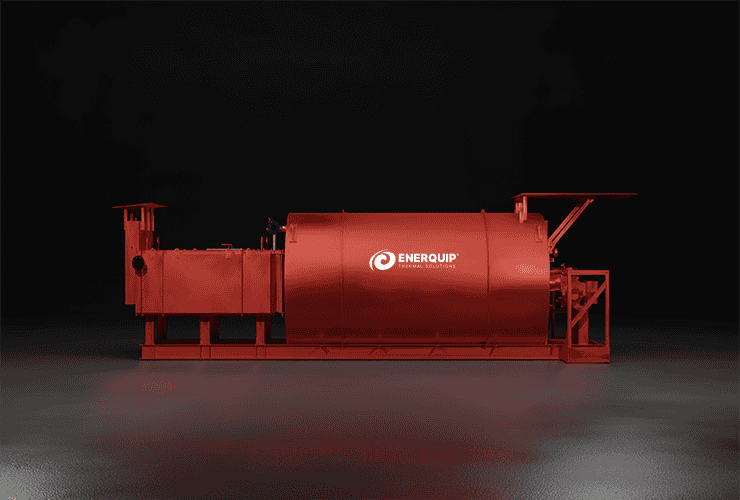
Enerquip offers serpentine coil and helical coil thermal fluid heaters, along with system options that can include controls, pumps, expansion tanks, and solutions designed around the requirements of the application.
Explore Enerquip’s thermal fluid heating solutions to learn more about available options.
Discuss Your Thermal Fluid Heater Replacement With Enerquip
If your current heater is requiring more repairs, struggling to meet process demands, becoming harder to maintain, or causing more production interruptions, evaluating your options before a complete failure can give your facility more time to prepare.
Enerquip works with industrial facilities to develop thermal fluid heating solutions around the needs of the application. Bring your current heater information, process temperatures, heat-load requirements, operating challenges, and future production plans to the conversation.
Contact Enerquip to discuss your industrial heating system and thermal fluid heater replacement needs.